
The Supreme Court of India has asserted its jurisdiction to determine what constitutes a superstitious practice within a religion, during a hearing on petitions related to discrimination against women at religious sites.
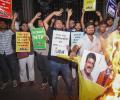
The Supreme Court on Monday said it was sad that National Testing Agency has not learn lessons from the earlier NEET paper leak as it sought response from the Centre, NTA and Central Bureau of Investigation on pleas for replacement of the testing agency with a robust and autonomous body to conduct the medical entrance exam.
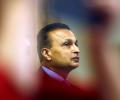
Industrialist Anil Ambani has approached the Supreme Court seeking a court-facilitated debt resolution similar to the one provided to Sterling group's Nitin and Chetan Sandesara, and five other members of their families.

The Madhya Pradesh High Court has overturned the anticipatory bail of former judge Giribala Singh, who is accused in the death of her daughter-in-law, Twisha Sharma, citing factual aspects of the case and allegations against her.
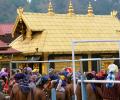
The Supreme Court of India questioned the Centre regarding the eligibility of non-devotees to challenge the customs of the Sabarimala temple in Kerala, during a hearing on religious freedom and discrimination against women at religious sites.

The Supreme Court has permitted the Unnao rape survivor to become a party in the CBI's petition challenging the suspension of Kuldeep Singh Sengar's life imprisonment, affirming the victim's right to be heard in the proceedings.
The Supreme Court overturned a Delhi High Court order that had suspended the life sentence of former BJP MLA Kuldeep Singh Sengar in the 2017 Unnao rape case, instructing the High Court to reconsider the plea.

The Supreme Court has deferred the hearing on a PIL alleging large-scale banking fraud involving the Anil Dhirubhai Ambani Group and its firms to May 8.

The Supreme Court allowed a pregnant woman and her child into India on humanitarian grounds after they were pushed into Bangladesh.
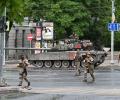
The Centre informed the Supreme Court that ten Indians have died while fighting alongside Russian forces in the Russia-Ukraine war. The court is hearing a plea seeking the repatriation of Indians allegedly forced to fight.

The Enforcement Directorate has accused West Bengal Chief Minister Mamata Banerjee of obstructing its investigation into a Rs 2,700-crore coal smuggling case, alleging she used state machinery to halt a search of an I-PAC office in Kolkata.
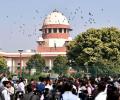
A bench comprising Chief Justice B R Gavai and Justices Ujjal Bhuyan and K Vinod Chandran dismissed the PIL filed by lawyer Vishal Tiwari after Solicitor General Tushar Mehta objected to it.

A bench comprising Chief Justice Surya Kant and Justices Joymalya Bagchi and N V Anjaria said it would issue whatever orders or clarifications are required in the matter.
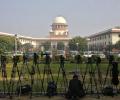
A nine-judge Supreme Court bench has commenced hearing on petitions related to discrimination against women at religious places, including the Sabarimala temple, and the scope of religious freedom across faiths.

The Supreme Court has directed the central government to provide accurate transcripts of videos related to climate activist Sonam Wangchuk's detention, emphasizing the need for precision in translations, especially with the advent of Artificial Intelligence.

Chief Justice of India B R Gavai affirmed his respect for all religions after facing online criticism regarding comments made during a case about the reconstruction of a Lord Vishnu idol.
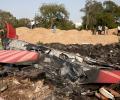
The Centre informed the Supreme Court that the Air India pilot has not been blamed in the AAIB's preliminary report into the June 12 plane crash that claimed 260 lives. The court is hearing a plea for a parallel inquiry into the accident.

A bench of Justices Vikram Nath and Sandeep Mehta termed the exorbitant rise of airfares by airlines as "exploitation" and asked the Centre and the Directorate General of Civil Aviation (DGCA) to file their replies to a PIL seeking binding regulatory guidelines to control the unpredictable fluctuations in airfare and ancillary charges imposed by private airlines in India.

The Centre has directed the NCERT to review all textbooks after the Supreme Court raised concerns about 'offending' content on corruption in the judiciary in a Class 8 social science book.
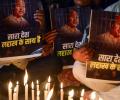
The Supreme Court addressed concerns regarding the detention of climate activist Sonam Wangchuk under the National Security Act, examining his health and the grounds for his detention.
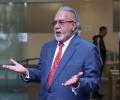
The HC posed the question to the 70-year-old liquor baron, wanted in India to face trial on fraud and money laundering charges, on his return home while hearing his twin pleas.
The Supreme Court has deferred the hearing on the CBI's petition challenging the suspension of Kuldeep Singh Sengar's life imprisonment in the 2017 Unnao rape case.
The Supreme Court has given the Centre four weeks to respond to pleas seeking the restoration of statehood to the Union Territory of Jammu and Kashmir.
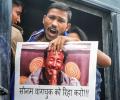
The Centre and the Union Territory of Ladakh administration have accused jailed climate activist Sonam Wangchuk of attempting to instigate Gen Z for protests, drawing parallels to unrest in Nepal, Bangladesh, and the Arab Spring.

The Supreme Court has ordered a 'fair, dispassionate, transparent, and time-bound' investigation by the CBI and ED into the Anil Dhirubhai Ambani Group, addressing concerns over alleged large-scale banking fraud and demanding accountability.

The Supreme Court is scheduled to hear a plea by the producer of the Tamil film "Jana Nayagan," starring Vijay, challenging a Madras High Court order that stayed the granting of a censor certificate to the movie. The film's release has been delayed due to certification issues.

The Attorney General has granted consent for initiating contempt action against an advocate, Rakesh Kishore, who hurled a shoe towards Chief Justice of India B R Gavai. The Supreme Court was informed of this development on Thursday.
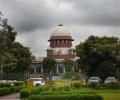
A bench comprising Chief Justice B R Gavai and Justices Augustine George Masih and AS Chandurkar also directed that the offending video be immediately taken down and restrained the YouTube channel from republishing it or similar content.
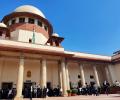
The Supreme Court, in a 2:1 majority, has recalled its previous judgment prohibiting the Centre from granting retrospective environmental clearances to projects violating environmental norms, paving the way for reconsideration of the issue.

Congress leader Rahul Gandhi has criticized the central government's alleged attempt to block the release of the Tamil film 'Jana Nayagan', calling it an attack on Tamil culture. The controversy surrounds the film's certification and release, coinciding with actor Vijay's entry into politics.
The Supreme Court has expressed serious concern over the 'hostage' situation involving seven judicial officials in West Bengal's Malda district, demanding explanations from state officials and authorising the Election Commission to seek a CBI or NIA probe.
Congress leader Rahul Gandhi has criticized the central government's alleged attempt to block the release of the Tamil film 'Jana Nayagan', calling it an attack on Tamil culture. The controversy surrounds the film's certification and release, coinciding with actor Vijay's entry into politics.

The ruling comes against the backdrop of an intensified anti-encroachment campaign launched by the Assam government since May 2021.
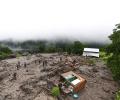
A bench of Chief Justice B R Gavai and Justice K Vinod Chandran also issued notices to the Union Ministry of Environment, Forest and Climate Change, the National Highway Authorities of India (NHAI) as well as the governments of Himachal Pradesh, Uttarakhand, Jammu and Kashmir and Punjab.

Solicitor General Tushar Mehta revealed a fake, verified X account created in the name of the 'Supreme Court of Karnataka' to highlight the dangers of unchecked online activity during a hearing on X Corp's petition challenging government takedown orders.
The apex court ordered that the Centre and state authorities comply with its directions immediately, and warned of 'serious action' if directions are defied in any form.

Justice Ujjal Bhuyan, who is sharing the bench, differed with the course of action adopted against the errant lawyer, and said, "I have my own views on this, he is the CJI, it is not a matter of joke!"
The Supreme Court has directed the CBI to submit a status report on the FIRs related to the 2023 Manipur ethnic violence and is considering having the Manipur or Gauhati High Courts monitor the trials.
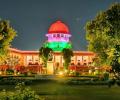
The Supreme Court of India has stated it will not monitor every instance of hate speech, citing existing legal and institutional mechanisms.
The Supreme Court is reviewing the detention of climate activist Sonam Wangchuk under the National Security Act, considering his health condition and allegations of inciting unrest in Ladakh.
